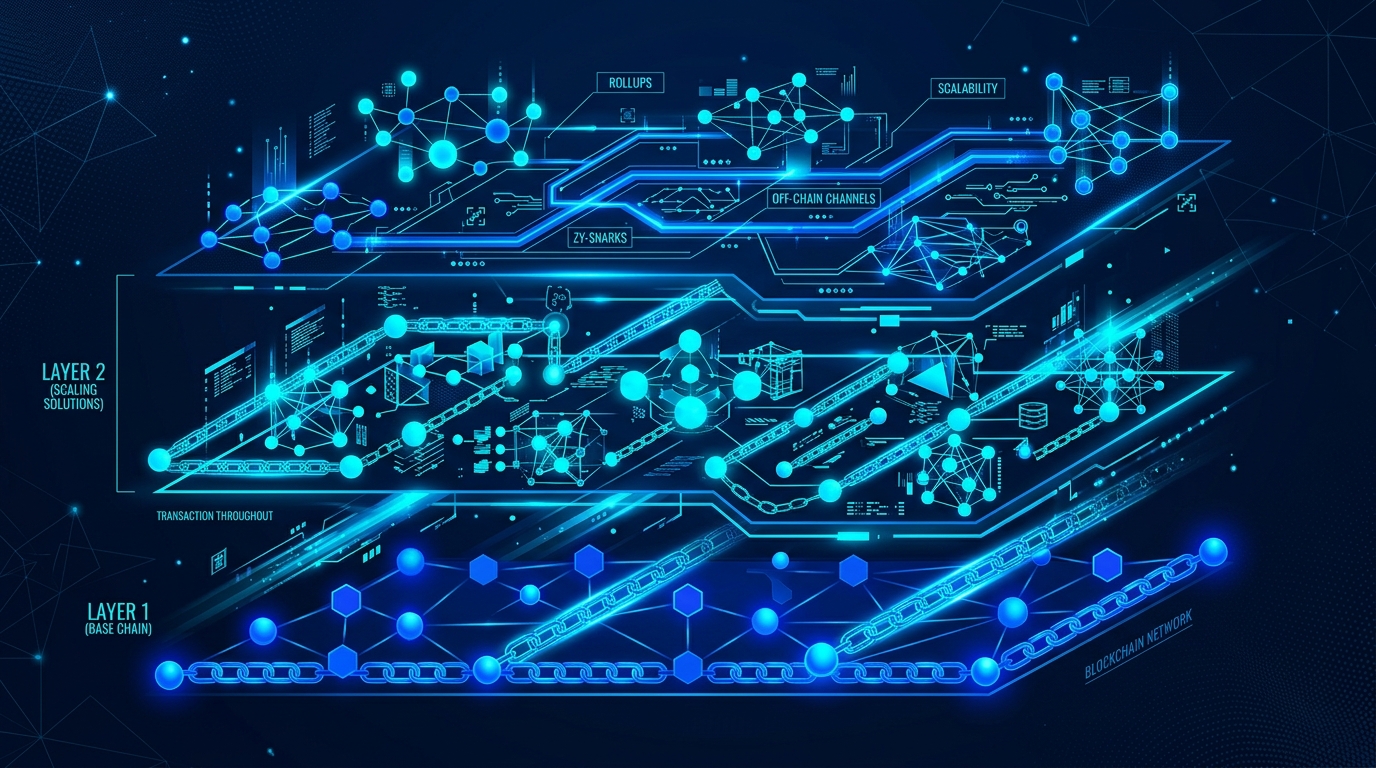
Bitcoin processes around 7 transactions per second. Visa handles up to 24,000. That gap is why Layer 2 solutions exist, and why they've become one of the most discussed topics in crypto development.
What Is Layer 1?
Layer 1 is the base blockchain itself. Bitcoin, Ethereum, and Solana are all Layer 1 networks. They're secure and decentralized, but that security comes at a cost: speed and transaction fees.
When Ethereum gets congested, gas fees spike. A simple token transfer can cost $20 or more during peak times. That's not a system built for everyday payments.
What Is Layer 2?
Layer 2 is a network that sits on top of a Layer 1 blockchain. It processes transactions off the main chain, then bundles or settles them back on Layer 1 periodically. The result is faster transactions and dramatically lower fees, without giving up Layer 1 security guarantees.
Think of it like a highway toll system. Instead of paying a toll for every single car separately, you batch them into one payment. Same security, far less friction.
The Main Types of Layer 2
Rollups
Rollups are the most popular Layer 2 method today. They take hundreds or thousands of transactions, process them off-chain, and post a compressed summary back to Ethereum. Two types dominate:
Optimistic rollups (like Arbitrum and Optimism) assume transactions are valid by default. There's a challenge window, usually 7 days, where anyone can flag fraud. This makes them simple and compatible with existing Ethereum smart contracts.
ZK rollups (like zkSync and StarkNet) use cryptographic proofs to verify every transaction. No waiting period needed. They're more technically complex but faster to finalize.
State Channels
State channels let two parties open a direct payment channel and transact as many times as they want off-chain. Only the opening and closing of the channel get recorded on Layer 1. Bitcoin's Lightning Network is the most well-known example, making Bitcoin viable for small, fast payments.
Sidechains
Sidechains are independent blockchains that run alongside a main chain and connect via a bridge. Polygon is the best example in the Ethereum ecosystem. It runs its own consensus but is fully compatible with Ethereum tools and apps.
Why This Matters for You
If you've ever sent a transaction on Ethereum and winced at the gas fee, Layer 2 solves that. On Arbitrum or Optimism, the same transaction might cost a fraction of a cent.
More DeFi protocols, NFT platforms, and exchanges are deploying on Layer 2. If you're not using it, you're leaving cheaper, faster options untouched.
How to Start Using Layer 2
Getting started is simpler than it used to be. You can swap or bridge assets directly to a Layer 2 network using a non-custodial exchange like ChangeNOW. (Affiliate link, we may earn a small commission at no extra cost to you.) ChangeNOW supports many Layer 2 tokens and lets you move between networks without a centralized exchange account.
From there, MetaMask lets you switch between Ethereum mainnet and Layer 2 networks with a single click.
The Bottom Line
Layer 2 isn't a workaround. It's a core part of how blockchains scale. Whether you're sending payments, using DeFi, or trading, understanding Layer 2 helps you do it cheaper and faster.